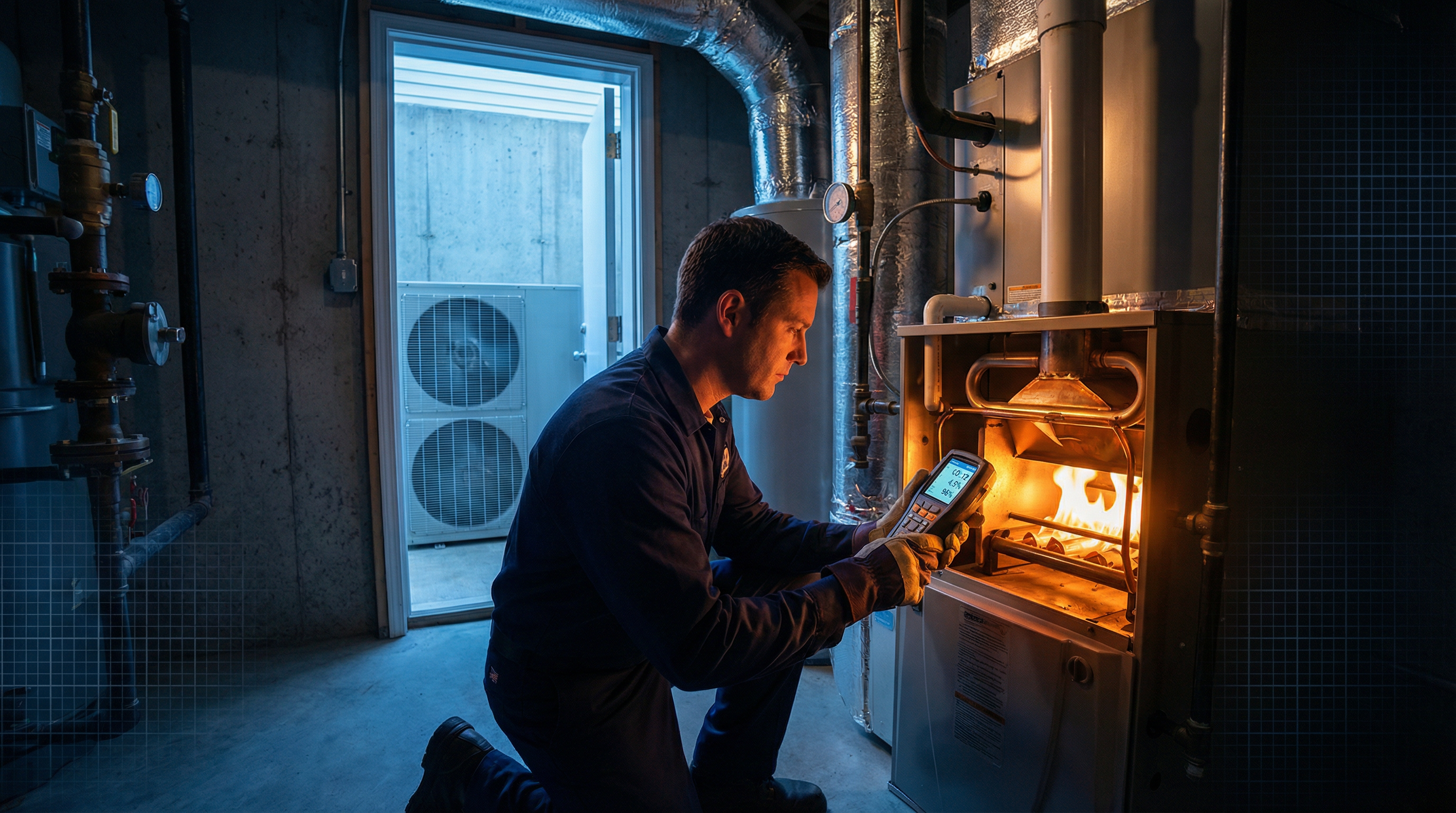
Heating Systems: Furnaces & Heat Pumps
Gas Furnaces, Heat Pumps, and Dual-Fuel Systems
A complete, field-ready education in the two dominant heating technologies: gas furnaces (natural gas and propane) and heat pumps (air-source and mini-split). Master combustion science, heat exchanger operation, defrost cycles, and systematic troubleshooting.
Lessons
Quiz Questions
Service Scenarios
Weeks
Built for the Real World
Heating systems are the backbone of residential and light commercial HVAC. Gas furnaces remain the dominant heating technology in most of the country, while heat pumps are the fastest-growing segment driven by electrification and efficiency mandates. This course prepares you to service both — the systems that exist today and the systems being installed tomorrow.
Gas Furnace Mastery
Natural gas and propane furnaces — combustion science, heat exchangers, gas valves, ignition systems, and the safety controls that protect lives.
Heat Pump Systems
Air-source heat pumps, mini-split heating mode, reversing valves, defrost cycles, auxiliary heat staging, and cold-climate heat pump technology.
Dual-Fuel Configurations
How to design, install, and troubleshoot dual-fuel systems that combine heat pumps with gas furnaces for optimal efficiency and comfort.
Combustion Analysis
Flue gas analysis, CO detection, draft measurement, and the combustion testing procedures that ensure safe operation and code compliance.
Advanced Diagnostics
Systematic fault isolation for both furnaces and heat pumps — pressure testing, electrical diagnostics, and the reasoning that solves problems fast.
Certification Aligned
Content maps directly to NATE Gas Heating, NATE Heat Pump, and EPA 608 Universal certification requirements.
5 Modules. 26 Lessons. Zero Fluff.
Every lesson is built around one principle: understanding why a system works is the fastest path to diagnosing why it doesn't.
Establishes the combustion science and gas furnace fundamentals that every heating technician must understand — from fuel chemistry and NFPA 54 (National Fuel Gas Code) compliance to venting categories and combustion air requirements.
Skills That Pay the Bills
By the end of this course, you'll be able to install, service, and troubleshoot gas furnaces, heat pumps, and dual-fuel systems. Heating work is year-round in most markets — and the pay reflects the demand.
/Hour
Average Heating Technician Salary
$50K–$100K annually. Techs with heat pump and combustion expertise earn the top range.
Is This Course For You?
New HVACR Students
You've completed basic HVAC fundamentals and want to master the heating side — furnaces and heat pumps are where the winter money is.
AC-Only Technicians
You service cooling systems but want to add heating to your skill set — becoming a year-round technician doubles your earning potential.
Apprentices & Helpers
You're already in the field and want structured training to accelerate your skills and prepare for NATE Gas Heating and Heat Pump certification.
Career Changers
You're entering the trades and want a clear path into a high-demand career where heating technicians are needed in every market.
Learn From Someone Who's Done the Work
Oneil Fuller
HVACR Educator, Licensed Contractor, Author
Oneil Fuller is a licensed HVACR contractor in Texas and Georgia, EPA 608 Universal Certified, NATE Certified, and the founder of Support HVACR Trade Inc. and Support HVACR LLC. He specializes in commercial refrigeration, heat pumps, and advanced troubleshooting. This course is built from real-world field experience — not textbook theory.
Invest in Your Career
Heating Systems Course
Lifetime access. No recurring fees. No hidden costs.